A Strategic Playbook for Startup Founders and CTOs
As markets evolve and digital solutions mature, startup founders face the critical challenge of building SaaS products that are not only functional but scalable, secure, and cost-efficient. Building from scratch isn’t just a technical task. it’s a strategic undertaking that spans product design, engineering architecture, GTM alignment, and financial sustainability.
Define a Clear Product Vision Aligned with Market Gaps
Before code is written, validate the problem. Align product goals with actual customer pain points and market gaps. Avoid broad assumptions target a defined audience with measurable value delivery.
Key areas to focus on:
- Strategic use-case discovery
- Audience segmentation and prioritization
- Early validation with target users
- Competitive and substitute product mapping
Develop an MVP With Learning Objectives, Not Just Features
The MVP is not a trimmed-down product. it’s a strategic tool to gather feedback, measure traction, and test assumptions. Focus on features that validate product-market fit.
Considerations:
- Identify one core problem to solve
- Validate workflows with minimal tech investment
- Use low-code/no-code tools where applicable
- Align MVP metrics with business KPIs

Choose an Architecture That Supports Scale From Day One
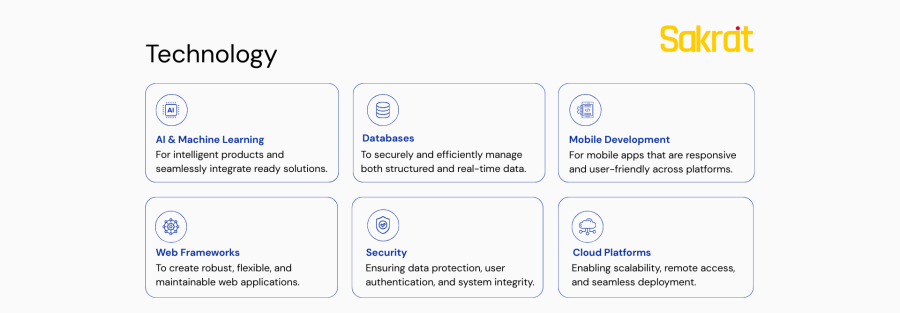
Tech stack decisions impact scalability, cost, and maintainability. Balance speed with long-term flexibility.
Architecture principles:
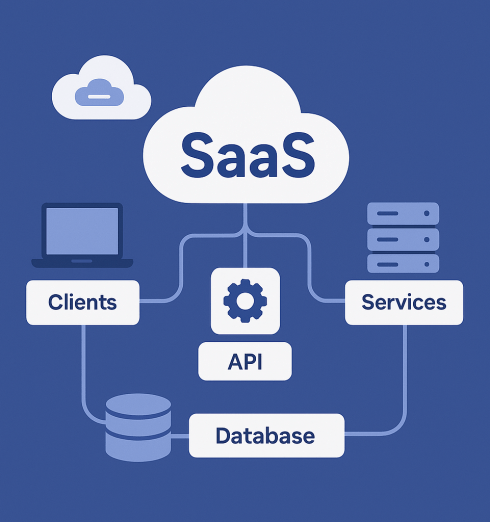
- API-first approach for extensibility
- Microservices or modular monolith depending on stage
- Cloud-native infrastructure (AWS, Azure, GCP)
- Emphasis on data security, compliance, and monitoring
- CI/CD pipelines and DevSecOps bakend in early
Manage Costs Intelligently Without Compromising Quality
Budget efficiency is not about cutting corners. it’s about informed trade-offs. Control your burn while maintaining quality.
Cost optimization levers:
- Offshore/nearshore tech teams for 50–70% operational savings
- Pre-built integrations to reduce custom code
- Phased roadmap execution with milestone-based delivery
- Use of proven third-party tools for payments, auth, analytics
Build a Go-to-Market Strategy in Parallel With Development
A strong product is only as successful as its market strategy. Align marketing, customer onboarding, and sales readiness during development.
Strategic alignment includes:
- Positioning and messaging early
- Landing page, waitlists, or community building
- Pricing model experiments based on user intent
- Launch planning and pilot user programs
Optimize Post-Launch Based on Real Metrics
Initial launch is just the beginning. Monitor behavior, usage patterns, and retention closely. Iterate fast with a dedicated growth roadmap.
Key metrics to monitor:
- Feature engagement and drop-off points
- User retention and activation rate
- Support tickets and friction zones
- Feedback from customer success and sales
Case Snapshot
Client: Australian Logistics SaaS Startup
Challenge: Build a scalable platform to digitize last-mile delivery ops
Solution:
- Cloud-native backend on AWS with multi-tenant architecture
- Mobile-first design with Flutter for cross-platform reach
- Embedded analytics and role-based access
- End-to-end development under $120K
What Sets Our SaaS Development Approach Apart?
- Strategic business lens, not just engineering focus
- Expertise in full lifecycle from ideation to market
- Scalable architectures built for growth, not rework
- Dedicated engagement models for early-stage founders
- Proven experience across fintech, logistics, edtech, and SaaS verticals
Ready to Build Smarter?
Whether you’re building a new SaaS platform or rethinking your existing one, we bring a partnership mindset backed by deep engineering expertise and real business context.
Let’s start with a strategic discovery session.
Talk to Our SaaS Experts →